
RESTORATIVE ASSISTS SKILLS TRAINING
with Alex Bauermeister
Restorative yoga invites students into stillness, but skillful assisting can help them settle even more deeply.
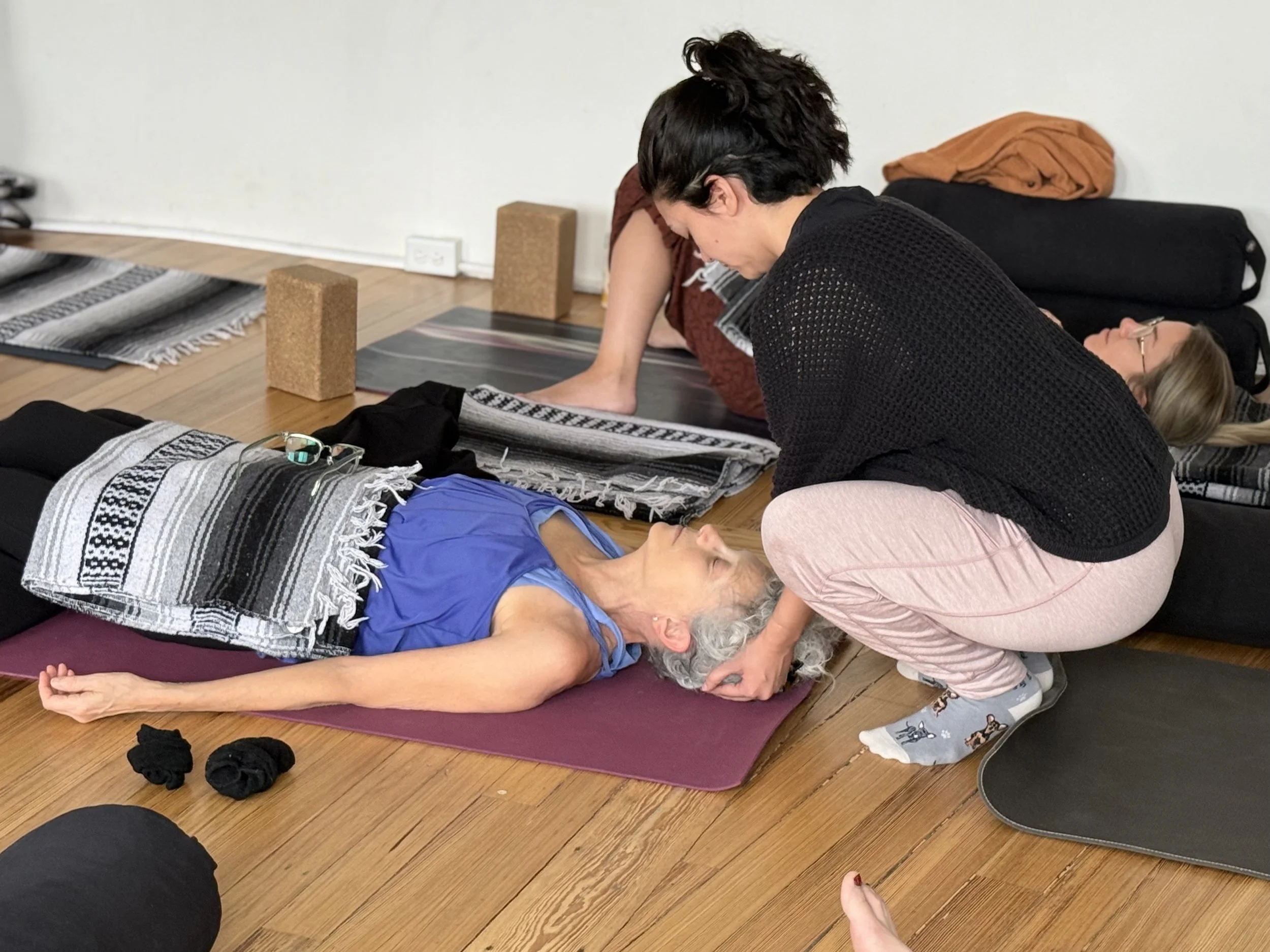
In restorative yoga, thoughtful touch has the power to support grounding, nervous system regulation, and deep relaxation. Through demonstration, discussion, partner practice, and guided feedback, you'll explore the art of offering trauma-informed, consent-based assists that feel both supportive and deeply nourishing.
This one-day yoga teacher training is designed for yoga teachers and practitioners who want to deepen their understanding of restorative yoga assisting. Through extensive hands-on practice, you'll build the confidence, sensitivity, and practical skills to offer restorative assists in both group classes and private sessions.
A signature focus of this training is learning how to provide steady, calming pressure using leverage, body weight, and skillful positioning rather than muscular effort alone. You'll discover how thoughtful body mechanics allow you to offer profoundly supportive assists while protecting your own body and conserving your energy.
Over the course of this training, you will:
Explore what supports trauma-informed, consent-based healing touch—and what can unintentionally undermine it.
Develop sustainable body mechanics that allow you to offer deep, calming pressure using leverage rather than force.
Cultivate energetic awareness and healthy boundaries so you can remain grounded and present while assisting.
Practice alignment-informed assists for a variety of restorative yoga postures.
Learn how to adapt pressure, pacing, and touch to meet different bodies, nervous systems, and individual preferences.
Refine your touch, presence, and attunement through giving, receiving, and reflecting on feedback.
This training is ideal for yoga teachers, trainees, and dedicated practitioners who want to deepen their understanding of restorative yoga assisting. Previous experience with restorative yoga postures is recommended, but no prior experience with bodywork or yoga teaching is required.
This training also serves as a mentorship pathway for those interested in applying to assist at Alex's monthly restorative yoga workshops.

WHO IS THIS TRAINING FOR?
TUITION:
In support of increasing our awareness of collective care, JPCY offers tiered pricing which allows you to self-select the pricing options that best reflect your financial needs and resources in this moment. We are committed to addressing structural inequities that have historically existed in yoga spaces by creating a pricing model that reaches a wider range of students. The highest tier of this training is priced to reflect the market value for similar trainings in the Boston area. We ask those of you who can afford to invest in your learning at this tier to consider doing so - this pricing level contributes directly to the longevity of our small business and the livelihood of our teachers.
HOW TO CHOOSE A TIER:
-
Reflects an average market rate. It is intended for those who are able to support JPCY at the true cost of our offerings.
This tier is suited for people with a stable income and access to food, housing, and healthcare, the ability to build savings and afford leisure activities (dining, traveling, etc).
-
Provides a more comfortable option for anyone who cannot afford the standrard rate.
This tier is suited for people with unstable/reduced/low income that creates some stress about meeting basic needs.
-
Provides an even greater discount for those in need of greater financial assistance.
This tier is suited for people with unstable or inadequate income that sometimes prevents access to food, housing, and healthcare.
-
In support of diversifying yoga leadership, Black, Indigenous, and People of Color registering for this training have the option to use the discount code wellnessequity and save 50% off the standard rate.
We don’t assume that all who identify as BIPOC require or want financial support to access yoga. For those who do, we see this as step we can take towards offering reparations within a healthcare system that has predominantly failed communities of color.